The mehndi is the bride's happiest night: the dholki, the dances rehearsed for weeks, the henna, the flowers, the
photographs full of colour. Her outfit has one job besides looking beautiful: letting her move. This guide covers the
mehndi looks brides in the UK, USA, Canada and Australia ask us for, the colours, the handwork that suits the night,
and the practical things that make a mehndi outfit work.
The classic: a yellow sharara
Yellow is the mehndi colour, and a yellow sharara set (a short or mid-length shirt with wide flared trousers and a
dupatta) is the classic bridal mehndi outfit. Butter yellow and mustard are the two shades brides choose most: butter
yellow is soft and photographs fresh in daylight, mustard is deeper and suits an evening mehndi under lights. Gota
borders, multicolour resham and mirror work are the mehndi handwork, and a contrast dupatta (green, orange, pink)
finishes the look.
Green: the gharara and the lehenga
Green is the other traditional mehndi colour. A green gharara (the pleated-knee version of the sharara) with a short
kurti and gota work has a heritage, Lucknowi feel that has come back strongly. A mint or parrot-green lehenga with a
yellow or orange dupatta is the lighter, more modern take.
Multicolour: the mehndi mood
Many brides now choose a multicolour mehndi outfit rather than one colour: a lehenga in panels of pink, yellow, green
and orange; a shirt with multicolour resham florals; a dupatta in a different colour from the shirt and trousers. It
suits the mood of the night, which is joy rather than elegance, and it photographs beautifully against marigold and
rose decor.
Pastels: mint, peach and pink
Not every bride wants bright. Mint, peach, blush and lilac mehndi outfits with silver or gold gota are a softer choice
and pair well with a walima in similar tones. A peach lehenga with a mint dupatta, or a lilac sharara with pink gota,
is a mehndi look that still reads as mehndi without the shout.
The silhouettes that work for dancing
The mehndi outfit has to survive the dances, the stage and sitting cross-legged for the henna. The silhouettes that
work:
- Sharara: wide flared trousers, free at the knee. The easiest to dance in.
- Gharara: wide below the knee with a pleated join. Beautiful, slightly heavier.
- Light lehenga: a lehenga in a lighter fabric with a short choli or a short shirt. Keep the flare moderate and the
work light so it is not heavy to twirl. - Short shirt and trousers: the simplest, with the colour and gota doing the work.
Avoid long trails, very heavy skirts, and anything with a tight waist you cannot sit in.
Handwork for the mehndi
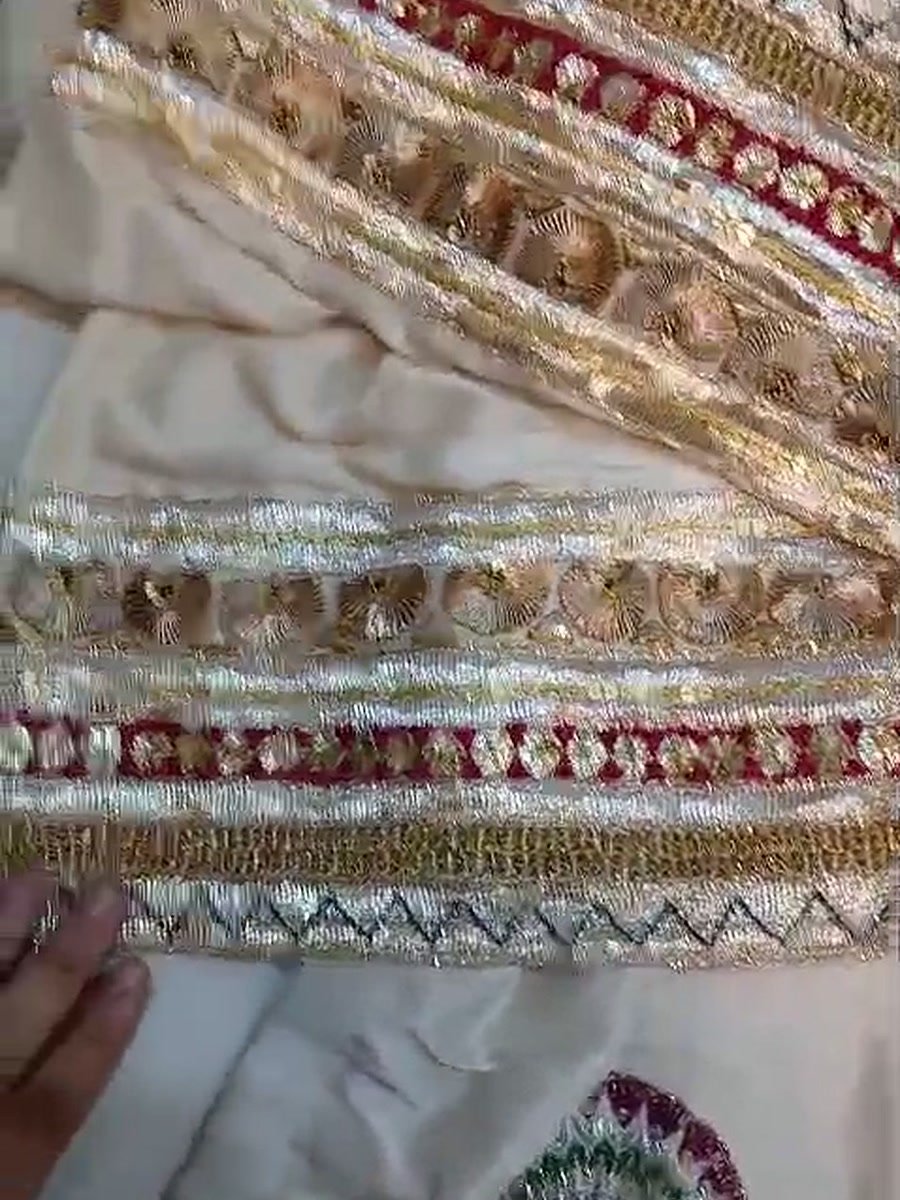
The mehndi night is for gota, resham, mirror work, sequins in colour and light tilla, not for heavy zardozi. Gota
(woven gold or silver ribbon appliqué) is the mehndi signature: in borders, in flowers, in a jaal across a dupatta.
Multicolour resham florals suit shirts and dupattas. Mirror work catches the light during the dances. Keep the work on
the dupatta, the neckline and the hem; a plainer body keeps the outfit light.
Fabrics
Chiffon, cotton-silk, organza and light silk are mehndi fabrics: they move, they breathe and they do not weigh. Net
can work for a dupatta. Avoid velvet and heavy raw silk; they are for the barat and winter formals. If the mehndi is
outdoors in summer, breathable fabric matters as much as the look.
Practical things brides forget
- The henna. Fresh mehndi paste stains fabric, and the bride's hands are covered in it for hours. Darker
colours and busy prints forgive; white and pale ivory do not. Sleeves that end above the wrist help. - The flowers. Floral jewellery is the mehndi tradition. Choose a neckline that shows it.
- The dupatta. A lighter dupatta draped once, pinned, so it survives the dances.
- The shoes. Flat embroidered khussas or low block heels.
Matching the mehndi to the rest of the week
The mehndi is the one night where the bride can be playful, so it is usually the brightest outfit of the four. If the
barat is deep red and the walima ivory, a yellow or multicolour mehndi gives three distinct photographs. If the bride
prefers a softer set across the week, a pastel mehndi pairs with a pastel nikkah and an ivory walima.
Having your mehndi outfit made to measure
Every mehndi piece we make is made to order in our own workshop in Pakistan, in the colour you choose and to your
measurements, so the sharara fits at the waist and the shirt is the length you dance in. Brides often send us a mehndi
look they love and ask for it in a different colour or a lighter version. See the mehndi page
for pieces made in our workshop, and get a look made for how changes work.
Questions brides ask
Can my mehndi outfit match my sisters' and cousins'? Yes, and it is the easiest way to coordinate the night: one colour family, different pieces, the bride in the brightest or the most worked. We make family sets together.
Is a lehenga too heavy for the mehndi? Not if it is made for it: a light fabric, a moderate flare, gota rather than zardozi. Tell us you will be dancing and we will keep it light.
What about the groom's mehndi colour? Couples often coordinate: a yellow bride and a green groom's kurta, or the reverse. Tell us his colour and we will suggest yours.
Can the mehndi outfit be worn again? A lighter mehndi outfit in a wearable colour becomes an Eid or dholki outfit afterwards; many brides plan it that way.
A mehndi piece takes 8 to 12 weeks to make, plus shipping to the UK, USA, Canada or Australia. Send us your date and
your colours:
WhatsApp Omar Arshad Couture.