A Pakistani bride does not wear one dress. She wears three or four, over three or four nights, and each has its own
colour tradition. If you are planning your wedding in the UK, USA, Canada or Australia and your family is spread over
two continents, you have probably heard three different answers to "what colour should I wear". This is the full
picture: the traditional colour for each event, what brides are choosing now, and how to pick yours.
The short answer
- Mehndi: yellow, green, orange, or a mix of bright colours.
- Nikkah: white, off-white, ivory, or a soft pastel; green is the old nikkah colour.
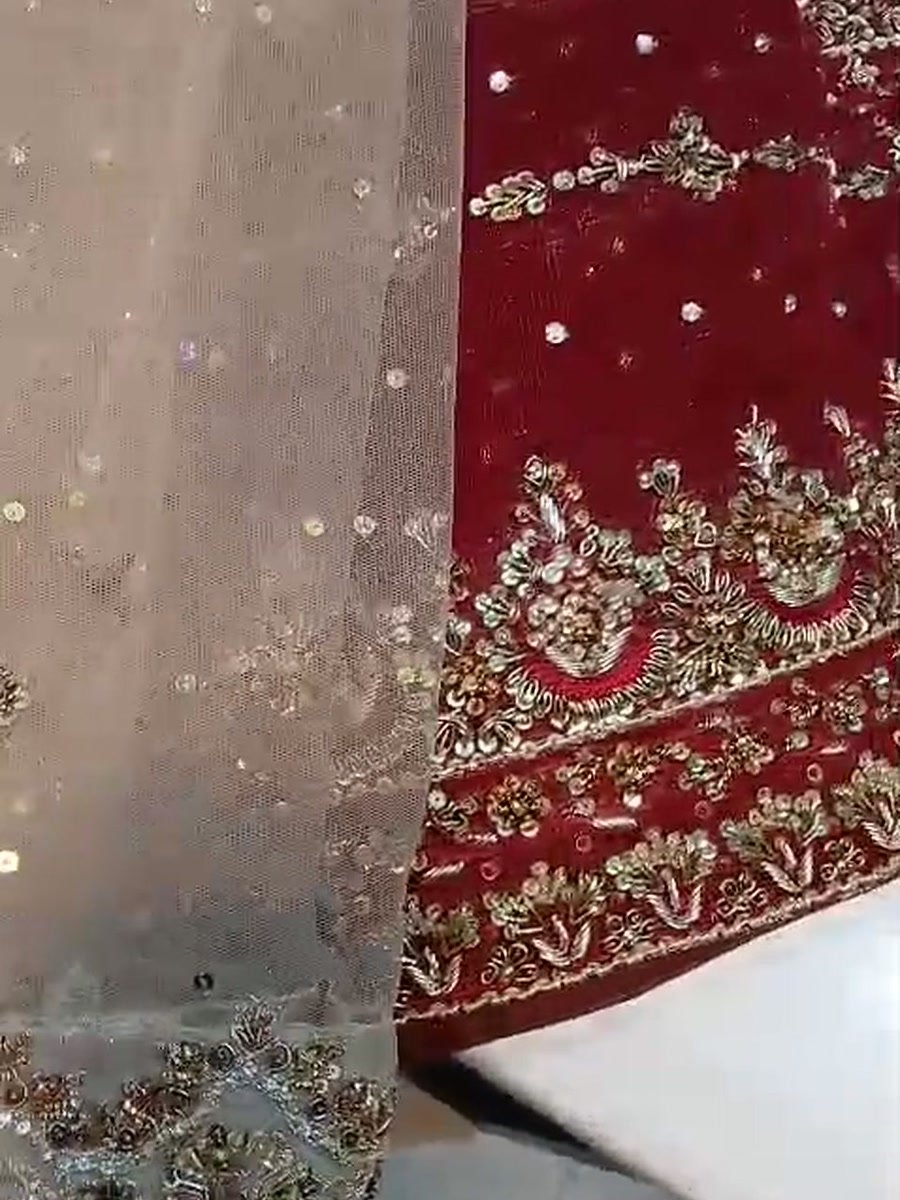
- Barat: red, or a shade of red: maroon, wine, rust, deep pink.
- Walima: ivory, champagne, gold, pastels, or a jewel tone for winter.
Everything below is the why, and the exceptions.
Why do Pakistani brides wear red?
Red is the colour of the barat because it has been the colour of South Asian brides for centuries: the colour of
celebration, of good fortune, of a new household. A red bridal lehenga with gold handwork is the image most families
carry of a wedding, and most brides still want that photo. Red also happens to be the colour that heavy gold zardozi
reads best on.
"Red" is a wide word, though. Brides today choose between classic red, deep maroon, wine, rust, antique red, deep
pink and coral. Darker reds suit heavier gold work and winter weddings; brighter reds and corals suit lighter work
and summer. Our barat page shows the range.
The mehndi: yellow, green and everything bright
The mehndi is the night of music and henna, and its colours are loud on purpose. Yellow and green are the tradition.
Brides now add mint, peach, pink, orange and multicolour gota work, and many choose a mix: a yellow shirt with a green
sharara, or a mint lehenga with a pink dupatta.
The mehndi outfit is also the lightest of the week. Gota, resham and mirror work rather than heavy zardozi, so the
bride can dance. See our mehndi page.
The nikkah: white, ivory and soft green
The nikkah is the marriage ceremony itself, and brides keep it soft. White and off-white have become the modern nikkah
colours, often with pearls, naqshi or fine silver work. Pistachio and soft green are the traditional nikkah colours
and are coming back. Blush pink, powder blue and lilac are popular for daytime ceremonies.
Many brides make the nikkah outfit modest: full sleeves, a higher neckline and a dupatta or veil that sits over the
head during the ceremony. Our nikkah and modest bridal pages have more.
The walima: ivory, gold and jewel tones
The walima is the groom's family's reception and the night the bride is photographed the most, so the colours are
elegant rather than loud. Ivory, champagne, gold, silver and blush are the most chosen. For a winter walima, a jewel
tone in velvet (emerald, navy, wine, plum) is just as traditional and looks rich in photographs.
The walima silhouette is softer too: a flowing gown or maxi, a long shirt over a lehenga, or a pishwas, with pearls,
sequins and fine dabka. See our walima page.
What brides abroad are choosing now
From the brides we work with in the four countries, a few patterns:
- Classic red at the barat is still the first choice, but deep maroon and wine are close behind, especially for
winter weddings and for brides who want a darker, richer photo. - White nikkah outfits are now more common than green ones among brides abroad.
- Walimas have moved to ivory and champagne, with pastel and sage as the alternatives.
- Mehndi colours are getting more mixed: fewer plain yellow outfits, more multicolour and pastel combinations.
Choosing your colours as a set
Think of the week as a set rather than four separate choices. A bride who wears a bright multicolour mehndi, a soft
ivory nikkah, a deep maroon barat and a champagne walima has four distinct photographs and no two nights that look
alike. If you are doing two events only, a red barat and an ivory walima is the classic pair.
Two practical points:
- Your skin and the light. Warm reds and golds suit warm skin tones; cooler wines and silvers suit cooler ones.
Outdoor daytime events want lighter colours; indoor evening halls can take deep, rich ones. - Tell your guests. Red at the barat and white at the walima are yours. Your family will quietly pass it on.
Having it made in the colour you want
Every piece we make is made to order in our own workshop in Pakistan, so the colour is your choice, not whatever is in
stock. Brides often send us a look they love and ask for it in a different colour: a maroon version of a red lehenga,
an ivory version of a pastel walima piece, a sage nikkah outfit instead of white. We plan the shade with you on
WhatsApp, with fabric photos, before the piece is made. Get a look made explains how.
Each piece takes 8 to 12 weeks to make, plus shipping to the UK, USA, Canada or Australia, so message us at least four
months before your date. Tell us your events and the colours you are thinking of:
WhatsApp Omar Arshad Couture.