Most brides never see the stage between the reference picture and the finished dress. It is the stage that decides whether the dress fits and whether the handwork lands where it should. In our workshop that stage is a drawing, at the real size of the dress, made before a single stitch. This guide explains what it is, why we insist on it, and what it means for a bride ordering from the UK, the USA, Canada or Australia.
A drawing the size of the dress
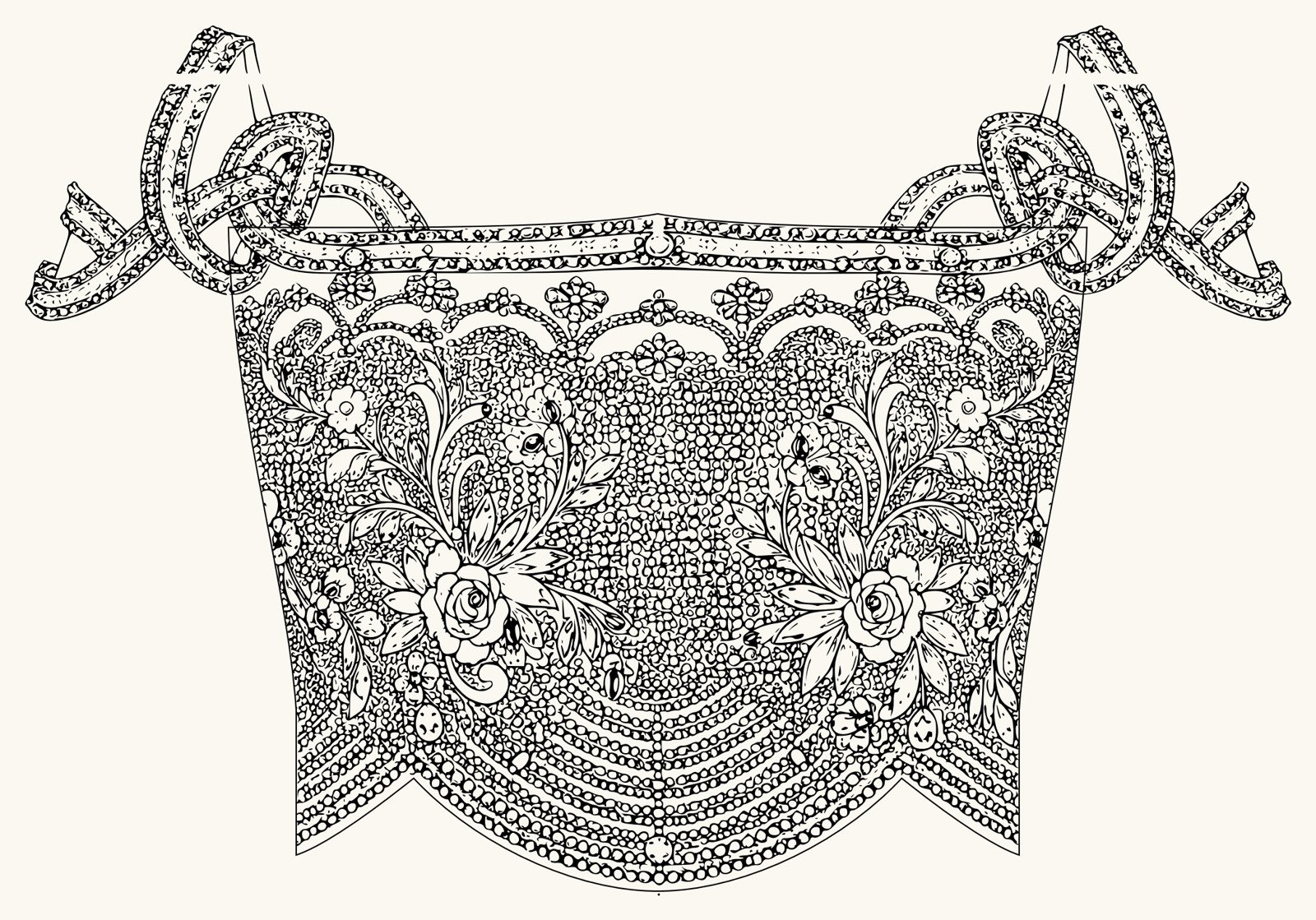
A reference picture tells us the look. It cannot tell us the size. A bodice in a photograph has no inches; it has whatever the camera and the model gave it. So the first thing we do with a confirmed look is to draw it again on paper at the exact size it will be cut: the bodice at its real length from the shoulder, the panels at their real width and real length, the neckline at its real depth. One unit on the drawing is one inch on the dress.
The embroidery is drawn onto that shape, motif by motif, line by line. The sprays sit where they will sit on the body. The border at the hem is as deep as it will be. If a lattice has forty cells across the panel, the drawing has forty cells across the panel.
Inches, not pictures
The sizes on the drawing come from your measurements, taken at home with our guide or on a video call with us. The chest, the waist and the hip set the width of the pieces; the shoulder and the length you want set the height; the neckline and the sleeve are agreed with you and drawn in. A bride who is five foot two and a bride who is five foot nine get different drawings of the same look, and the handwork is placed differently on each, because the waist is in a different place.
This is the difference between made to measure and a ready piece taken in at the seams. When a dress is only altered, the embroidery stays where the factory put it, and on a different body the motifs land in the wrong place. When the drawing is yours, the embroidery is yours.
The one-inch square
The drawing goes to the karigar as a print at 100 percent. Printers drift: a page set to “fit” can shrink a design by a few percent without anyone noticing, and a few percent across a 37-inch panel is more than an inch. So every page we print carries a small square that must measure exactly one inch. The karigar puts a tape on it before any work starts. If the square is wrong, the print is wrong, and it goes back.
From the drawing to the frame
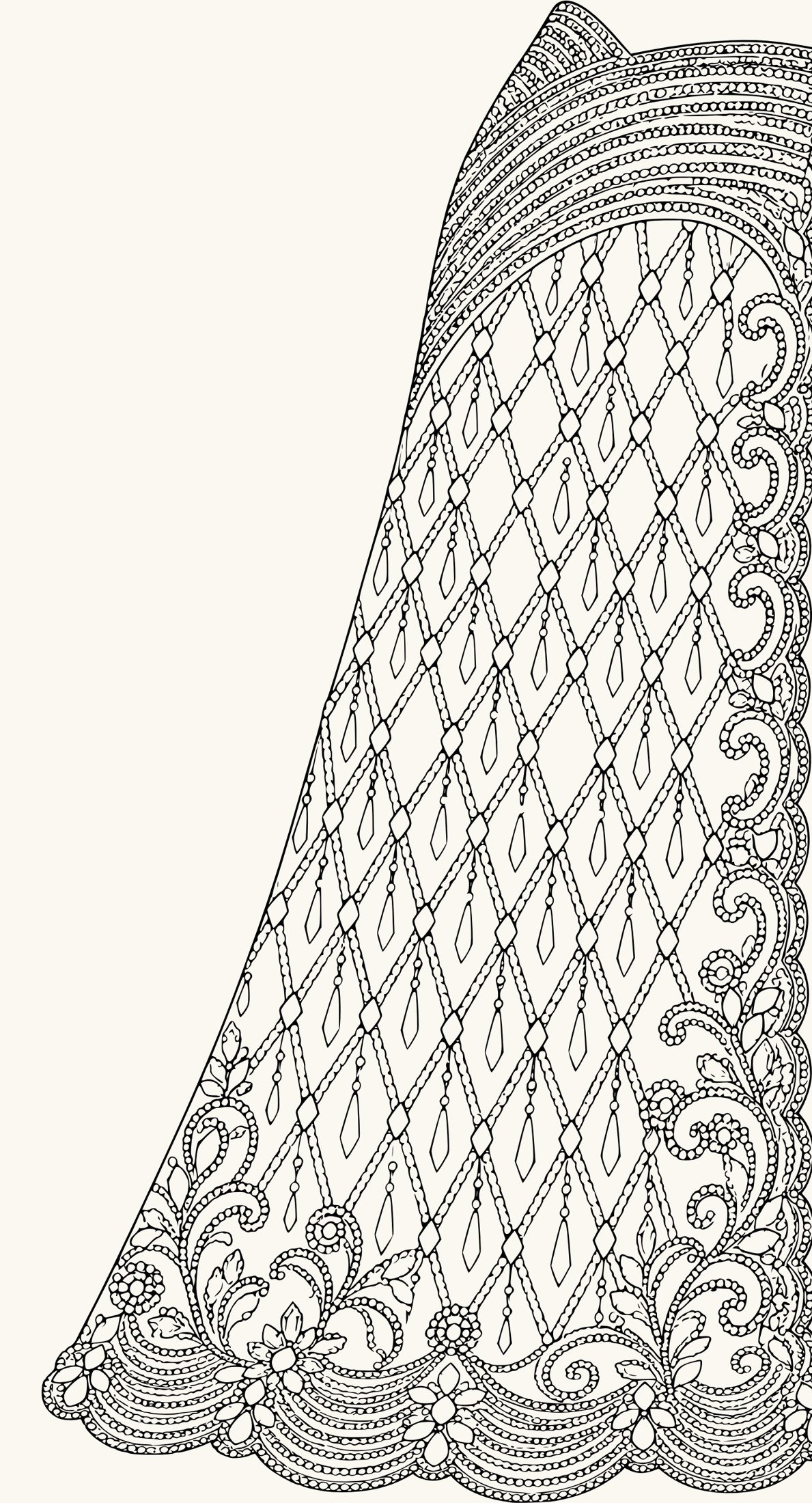
The design is transferred from the print to the fabric, and the fabric is stretched on the adda, the wooden frame the karigars work around. A sample of the main work is embroidered first, a few inches of the bodice or one cell of the lattice, and photographed next to the drawing. We check the bead size, the density and the colour against what was agreed before the full piece starts. Then the whole bodice and both panels go on the frame, and the work follows the drawing line for line.
What can still change, and when
Until the drawing is signed off, anything can change: the neckline, the depth of the border, the weight of the work, the colour. Changes at this stage cost nothing but a conversation. Once the fabric is on the frame, a change means undoing work, so we agree the drawing with you first, in pictures you can read, and only then does it go to the karigar. That is also why we quote the time from the day the design is agreed, not from the day of the first message.
What it means for you
Fewer surprises. The fitting shirt that travels to you before the dress checks the drawing against your body, and the dress that follows is cut from the same drawing. The handwork sits where you saw it on paper. And the piece is yours in the plain sense: there is a drawing with your name on it, and nobody else’s dress was cut from it.
If you have a look in mind, here is how a look gets made. Send it to us on WhatsApp with your wedding date and where you live, and we will tell you what it would take.
Have a look in mind?
Send it to us on WhatsApp with your date and your city, and we will say what it would take, in plain words. No obligation.