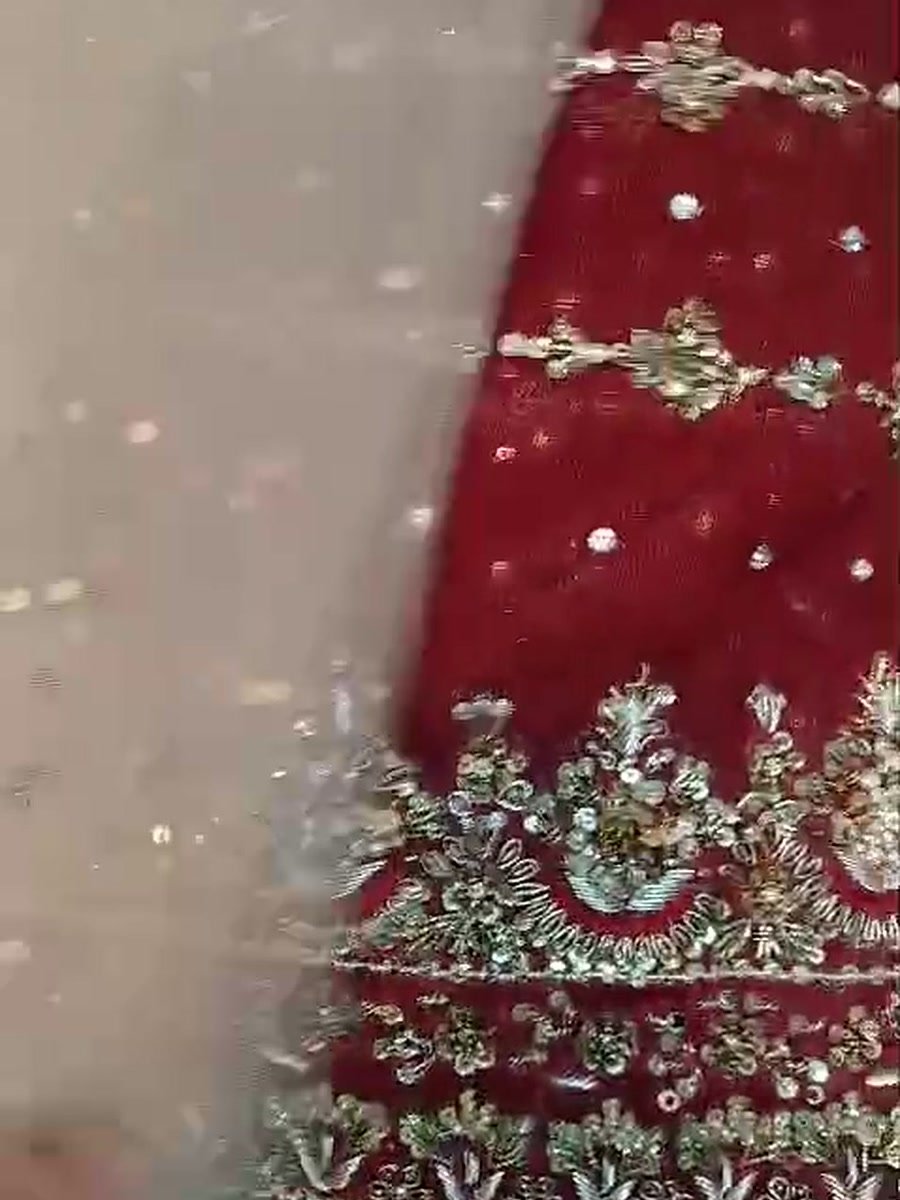
Three words come up in every conversation about Pakistani bridal and wedding wear, and brides abroad often use them
interchangeably: gharara, sharara and lehenga. They are three different garments with different histories, different
fits and different jobs across the wedding week. This guide explains what each one is, who it flatters, which event
it suits, and what to tell your maker.
The lehenga
A lehenga is a long, flared skirt, worn with a choli (a fitted blouse, short or long) and a dupatta. The flare comes
from panels (kali) and from a can-can underskirt, and the skirt can be A-line, full circle, fishtail or with a trail.
- The look: the grandest bridal silhouette, the one most brides picture for the barat.
- Who it suits: almost everyone. A fuller flare balances a slim frame; an A-line with a long shirt over it is
kinder to a fuller figure than a short choli. - Events: the barat first; also the walima in lighter fabrics and the mehndi in a light version.
- Variations: lehenga with a short choli; lehenga with a long shirt (a kurti to the knee or longer); lehenga saree
(a pre-draped saree over a lehenga skirt). - Weight: the heaviest of the three when fully worked, because the skirt is the largest area for handwork.
The sharara
A sharara is a pair of very wide, flared trousers, flared from the waist or the hip, worn with a short or mid-length
shirt and a dupatta. From a distance a sharara can look like a skirt; up close it is two legs of fabric.
- The look: flowing, graceful, lighter than a lehenga, with movement when you walk and dance.
- Who it suits: tall and medium frames love it; the flare from the waist adds volume, so petite brides often
choose a flare from the knee or a lehenga instead. - Events: the mehndi (the yellow sharara is the mehndi classic), the nikkah (a soft sharara with a long shirt),
and the walima in pastels. Also a strong barat choice for brides who do not want a skirt. - Weight: lighter than a lehenga, and the easiest of the three to dance in.
The gharara
A gharara is the heritage garment of Lucknow and the old Muslim households of the subcontinent: trousers fitted from
the waist to the knee, then joined at the knee (the joint is called the goat and is often covered with a band of gota
or lace) to a very wide, pleated flare below. It is worn with a short kurti and a dupatta.
- The look: regal and old-world, with the distinctive knee joint and the sweep of the flare.
- Who it suits: the fitted upper leg and the wide flare below suit most frames and are flattering on a fuller
figure; a short kurti shows the waist, a longer one covers it. - Events: the barat for a traditional bride (a red gharara with gold work is a classic), the nikkah, and the
mehndi in green or multicolour. The gharara had faded for a while and has come back strongly. - Weight: the pleated flare uses a lot of fabric, so a gharara is heavier than a sharara and needs skilled
stitching at the knee.
Side by side
| Lehenga | Sharara | Gharara | |
|---|---|---|---|
| What it is | Flared skirt | Wide flared trousers | Fitted to the knee, pleated flare below |
| Worn with | Choli or long shirt | Short or mid shirt | Short kurti |
| Feel | Grand | Flowing | Regal, heritage |
| Easiest to dance in | No | Yes | Middle |
| Classic event | Barat | Mehndi, nikkah | Barat (traditional), nikkah |
| Handwork area | Skirt (large) | Shirt and dupatta | Kurti, knee band, flare border |
How to choose for your week
A common set across the four events: a sharara for the mehndi, a sharara or gharara with a long shirt for the nikkah, a
lehenga for the barat, and a gown, maxi or lehenga with a long shirt for the walima. Brides who want variety in their
photographs choose a different silhouette for each night.
Three questions decide it:
- How do you want to move? Dancing nights want a sharara. The stage night can take a lehenga.
- What do you want to show? A short choli or kurti shows the waist; a long shirt covers and lengthens.
- How much handwork? The lehenga skirt is where the heaviest work lives; a sharara or gharara puts the work on the
shirt and dupatta and keeps the piece lighter.
Fabrics by garment
Lehengas take raw silk, velvet, net, organza and jamawar. Shararas want fabric that flows: chiffon, silk, organza,
crepe, or light raw silk. Ghararas are traditionally in raw silk, jamawar, brocade or silk, with the flare in a fabric
that holds a pleat.
Made to measure matters more here
The fit of all three lives in places a standard size misses: the length of the skirt or flare to your heel height, the
waist of the sharara, the knee position of the gharara's joint, the choli's bust and shoulder. A made-to-measure piece
is cut to those numbers. Our measurement guide shows what to measure and where the knee line goes
for a gharara.
Every piece we make is made to order in our own workshop in Pakistan, by hand, in your silhouette and colour. Send us
the look you love and tell us which of the three you want it as; we often make a lehenga look as a sharara, or a
sharara look as a gharara. Get a look made explains how. A piece takes 8 to 12 weeks to make, plus
shipping to the UK, USA, Canada or Australia.
Tell us your event and the silhouette you are leaning towards:
WhatsApp Omar Arshad Couture.
See the barat, nikkah and mehndi pages for pieces in each
silhouette.