Few faces have shaped what brides abroad want as much as Hania Amir's. Her bridal and nikkah looks in dramas and
shoots are saved, shared and sent to workshops like ours every week: "I want this, in my size, in this colour". This
guide describes the looks brides ask us about most, what makes each one work, and how we make a bride's own version of
a look like it. A note first: we do not use photographs of her or of the pieces she wore. The looks are described in
words, and the pieces on this site are our own work. Her pictures are a search away.
Why her looks travel so well
Hania Amir's wedding looks sit in the soft, modern end of Pakistani bridal: pastels and ivories, delicate handwork,
clean silhouettes, a lot of pearl and crystal, and a natural, fresh styling that reads beautifully in daylight. That
is exactly the mood brides in the UK, USA, Canada and Australia choose for nikkahs and walimas, which is why her looks
are among the most searched bridal references in all four countries.
The nikkah look: soft, pale and pearled
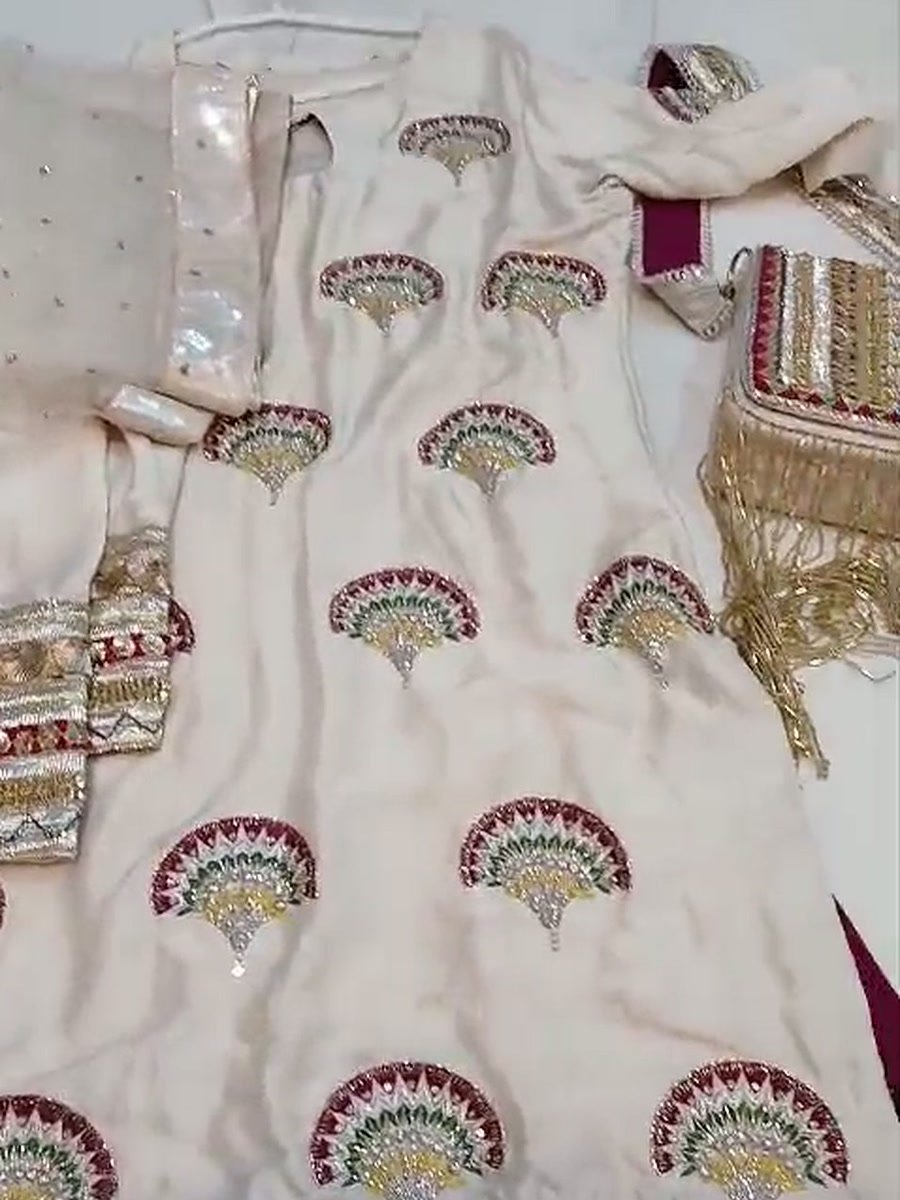
The nikkah looks brides reference most are in white, off-white, blush and the palest pink: a long shirt with a
sharara or straight trousers, or a light lehenga with a short choli, worked in pearls, fine naqshi and silver or
rose-gold sequins, with a long dupatta or veil over the head. The handwork is tone-on-tone, the fabric is organza,
net or chiffon, and the effect is light rather than colour.
To make your version: choose the base colour (off-white is more forgiving than stark white; blush suits warm skin
tones), decide the silhouette (sharara for movement, lehenga for fullness), and tell us how you will wear the veil
(over the head for the ceremony means the border is placed to frame the face). A modest version with full sleeves and
a higher neckline is natural for this look. See nikkah dresses.
The drama bridal: the red and gold barat look
On screen she has worn the classic barat: red or deep pink lehenga with gold zardozi and dabka, a heavy worked
dupatta over the head, a short choli, traditional jewellery. These looks are the reference for brides who want the
full traditional barat picture with a youthful, lighter feel than the heaviest couture.
To make your version: the shade decides the mood (bright red is youthful, maroon is richer), the dupatta is the
statement (a fully worked dupatta or a worked border with a clean ground), and the handwork weight can go up or down
from the reference. See barat dresses.
The pastel walima look
Her walima-style looks, in ivory, champagne, mint and pale gold, with pearls and crystals on a flowing gown, maxi or
pishwas, are the ones brides send for their own walimas: soft, glowing, modern.
To make your version: gown for the entrance, maxi for comfort, pishwas for the twirl; champagne photographs
warmer than ivory under hall lights; a cropped embroidered jacket over a gown is the detail brides ask for most. See
walima dresses.
The mehndi look: fresh colour
Her mehndi-style looks are in soft yellows, mints and peaches with gota and resham, lighter and fresher than the
traditional bright yellow. A short shirt with a sharara, a lightweight lehenga, floral jewellery.
What brides change from the reference
Almost no bride wants the exact look. The changes we make most often from a celebrity reference:
- The colour, to suit the bride's skin tone and her other events.
- The neckline and sleeves, usually more covered.
- The dupatta, heavier or lighter, or a veil instead.
- The handwork weight, lighter for a nikkah, heavier for a barat.
- A modest version from the start.
That is the whole point of made to measure: the look is the starting point, the piece is yours.
How it works from abroad
Send us the picture of the look (a screenshot is fine), the event, your date, your country and what you want changed.
We plan the design with you on WhatsApp, measure you on a video call or through our guide, and our
own workshop in Pakistan makes the piece by hand in 8 to 12 weeks. It ships finished to your door in the UK, USA,
Canada or Australia. How it works has the steps and get a look made has the
details.
Questions brides ask
Will my version look like hers? It will carry the look: the colour, the silhouette, the mood of the handwork. It is made in our workshop to your measurements, so it will fit you the way hers fit her, which is the part that matters in the photographs.
Her looks are very light. Can mine be heavier? Yes. Many brides keep the soft colour and add heavier work on the dupatta and bodice for a barat. Tell us the event and we will set the weight.
I wear a hijab. Does the look still work? Very well. Her nikkah looks are already covered and soft; a dupatta or veil designed to sit over a hijab, full sleeves and a higher neckline are natural additions.
How do I send the picture? A screenshot on WhatsApp is enough. Front and back if you have them, and the event and date.
Send us the look you have saved:
WhatsApp Omar Arshad Couture.