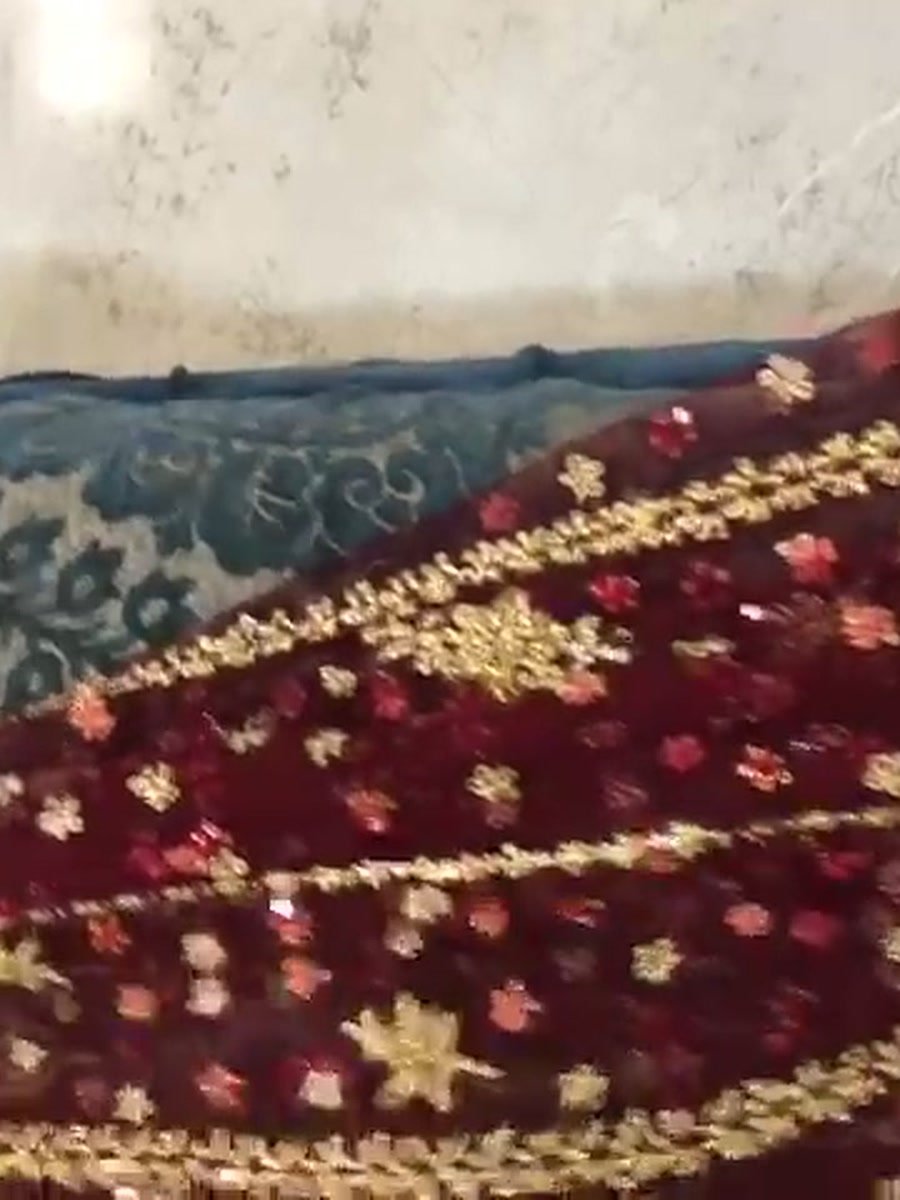
Pakistani wedding season runs from October to February, and in the UK, Canada and the northern United States those
are cold months. Velvet is the fabric made for them: warm, heavy, rich under lights, and the best background there is
for gold handwork. Here is how brides and their families use velvet across the wedding week, which colours and work
suit it, and what to know before ordering a velvet piece made to measure.
Why velvet works for winter weddings
Three reasons velvet is the winter choice:
- It is warm. A velvet long shirt or lehenga is comfortable in a cold hall, on a stage, and in the car. Organza is
not. - It photographs rich. Velvet absorbs light and gives colour a depth that silk and net cannot, so emerald reads
as emerald and wine as wine under hall lighting. - It carries handwork beautifully. Gold and antique gold zardozi, dabka and tilla sit on velvet as if they belong
there. The pile gives the metal thread something to rise from.
The velvet walima dress
The velvet walima dress is the winter walima look brides abroad ask for most. The classic is a long velvet shirt in
emerald, navy, wine, plum, bottle green or deep teal, worked in gold or antique gold at the neckline, sleeves and hem,
with a tissue or net dupatta. Velvet also makes a beautiful walima lehenga with a long shirt, or a velvet gown with a
worked bodice for brides who want the gown silhouette in winter.
Keep the dupatta light. A velvet shirt with a heavy velvet dupatta is too much weight and too much warmth; tissue,
net or organza balances it.
The velvet bridal lehenga
For the barat, a velvet bridal lehenga in deep red, maroon or wine with heavy gold zardozi is a winter classic. The
skirt is cut with a lighter lining and a can-can so the velvet keeps its flare without dragging, and the choli is
usually velvet too. The dupatta is net or tissue, worked to match. If you want the look but worry about the weight,
velvet choli and dupatta border with a raw silk or jamawar skirt is a common and lighter combination.
Velvet for the mother and sisters
Velvet formals are the family's winter uniform: a velvet long shirt with straight trousers or a sharara, in emerald,
navy, maroon, mustard, teal or black with gold work, and a contrast or tissue dupatta. They are comfortable for a long
night and look formal without competing with the bride. Our formals page shows the kind
of pieces made in our workshop.
Colours that suit velvet
Velvet wants depth, so the colours that suit it best are the jewel and wine tones:
- Emerald and bottle green: the velvet classic, with gold or antique gold.
- Navy and midnight blue: modern, with silver or gold.
- Wine, plum and maroon: rich and bridal, with antique gold.
- Deep teal and peacock: striking in photographs.
- Mustard and rust: warm, lovely for a winter mehndi or a daytime walima.
- Black: for guests and formals, never for the bride.
Pastels are possible in velvet (a blush or sage velvet nikkah outfit can be very pretty) but velvet comes into its own
in deep colour.
Handwork on velvet
Metal threadwork is velvet's natural partner: zardozi, dabka, tilla, kora and sitara in gold, antique gold, copper or
silver. Pearls and stones also sit well. Fine resham embroidery and gota are less common on velvet because the pile
hides the detail. Because velvet is heavy, the handwork is placed with weight in mind: dense at the neckline, sleeves
and hem, lighter across the body.
Fabric to know before ordering
- Silk velvet is softer, drapes better and costs more. Micro velvet is lighter and easier to wear.
- Velvet is cut in one direction so the pile catches the light the same way across the whole piece. This is why a
velvet piece needs more fabric than a silk one. - Velvet creases if folded tightly for shipping; we roll and pack it accordingly, and a steamer (never an iron on the
pile) brings it back. - A velvet piece should be stored hanging, in a breathable cover.
Timing a velvet order
Winter weddings cluster from November to February, and every workshop is busy then. A velvet piece takes 8 to 12
weeks to make plus shipping, so a December wedding should be ordered by August. Message us at least four months before
your date; earlier in the busy season.
Questions brides ask
Is velvet too hot for a heated hall? A velvet long shirt with a light dupatta is comfortable indoors in winter; a fully velvet lehenga with a velvet dupatta is warm. We balance the pieces, and the dupatta is where the weight comes off.
Does velvet work for a summer wedding in Pakistan? Not for the bride. For a December wedding in Lahore, yes; the nights are cold.
How does velvet travel? Rolled, in a breathable cover, never folded tightly. A hand steamer at the other end brings the pile back; an iron on the pile does not.
Silk velvet or micro velvet? Silk velvet drapes better and costs more; micro velvet is lighter, easier to wear and takes handwork well. We show you both on a call.
Every velvet piece we make is to order in our own workshop in Pakistan, in your colour and to your measurements. Send
us the look you love, the event and your date, and we will plan the fabric and the handwork with you:
WhatsApp Omar Arshad Couture.
See also walima dresses and barat dresses.