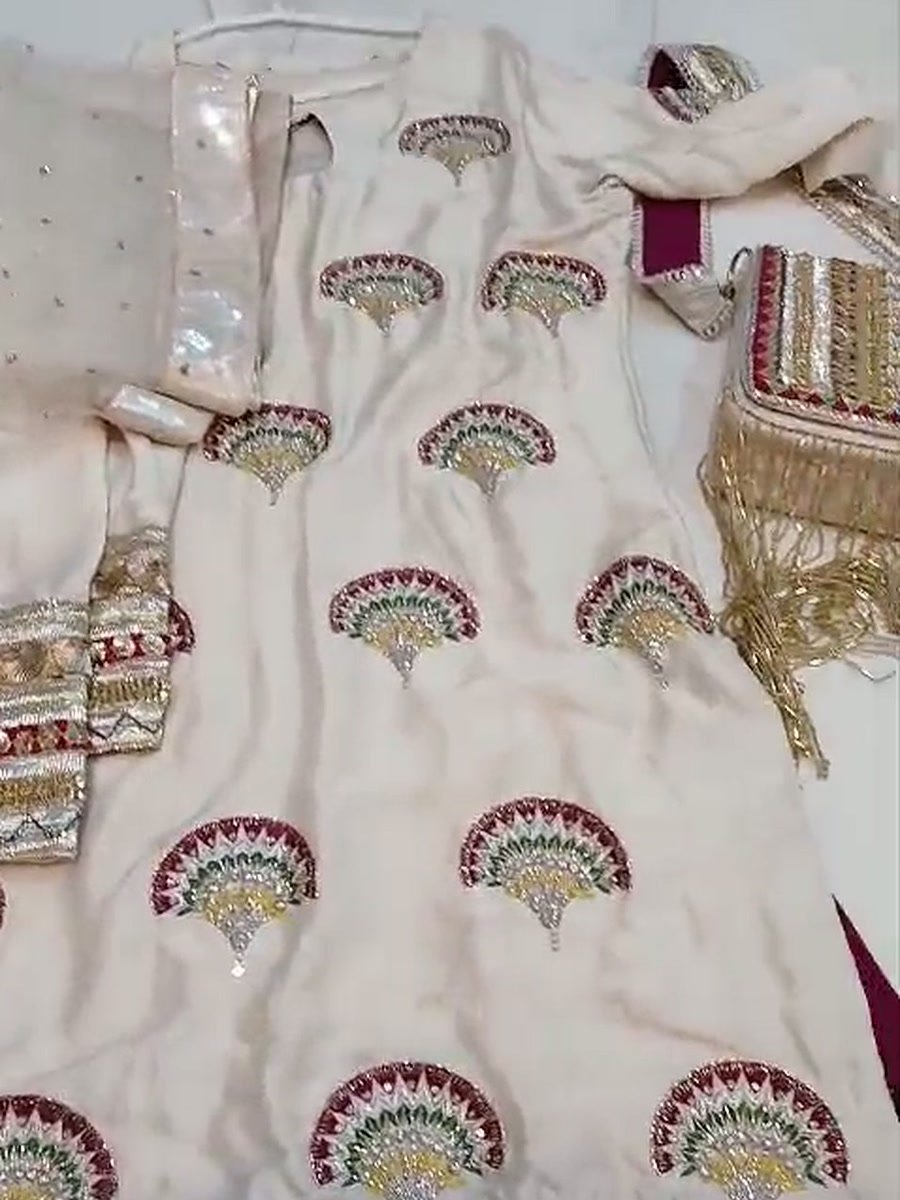
The bride's sister is in every photograph. So is her mother, and the cousins who stand with her on the stage. In a
Pakistani wedding the family dresses as a group across four events, and getting it right means each person looks
formal, nobody clashes with the bride, and the whole family reads as one picture. This guide is for the sister, the
mother and the bridesmaids: what to wear at each event, how to coordinate, and how to have it made.
The two rules
- The bride's colour is hers. Red or maroon at the barat, and whatever she has chosen for the walima (often ivory
or champagne), are not for the family. Ask her, and pass it on. - One step lighter than the bride. The family's handwork is lighter than hers at every event. Formal, yes.
Heavier than the bride, no.
The bride's sister
The sister's outfit is the most looked at after the bride's, and she is usually dancing, organising and on stage, so
it has to move.
- Mehndi: a bright sharara or gharara set, or a short shirt with gota work, in a colour that pairs with the
bride's mehndi outfit: if the bride is in yellow, the sister in green or orange; if the bride is multicolour, the
sister in one of her colours. - Nikkah: a pastel long shirt with trousers or a sharara, in a colour the bride is not wearing. If the bride is in
white, the sister in blush, sage or lilac. - Barat: this is the sister's formal night. A lighter lehenga, a long worked shirt with a sharara, or a gharara
in a jewel colour: emerald, royal blue, deep pink, teal, purple, gold. Never red. - Walima: elegant and soft. A long shirt with trousers, a pastel lehenga, a saree or a maxi in a colour that sits
beside the bride's: if the bride is in ivory, the sister in champagne-gold, dusty rose or sage.
The mother of the bride
The mother's outfits are formal, comfortable and dignified, and they tend to be the richest fabrics of the family's
set: raw silk, jamawar, velvet in winter.
- Mehndi: a worked long shirt with trousers in green, mustard or a deep colour. Lighter than the daughters.
- Nikkah: a soft, modest long shirt and dupatta in a pastel or ivory tone.
- Barat: a heavy formal: a long shirt in jamawar or raw silk with gold work, straight trousers or a gharara, and a
worked dupatta. Deep colours: wine, navy, emerald, bronze, plum. - Walima: a velvet or silk long shirt with gold or silver work, or a formal saree. Winter walimas are velvet's
moment; see our velvet guide.
Our formals page shows the kind of pieces made for mothers and sisters in our workshop.
Bridesmaids and cousins
Pakistani weddings abroad have borrowed the bridesmaid idea, and it works well at the mehndi and walima. The usual
way is one colour family in different pieces: all the cousins in shades of pink and peach, or in mint and sage, each in
a different silhouette (one in a sharara, one in a lehenga, one in a long shirt). It gives the group photo a
coordinated look without matching outfits.
For the barat, bridesmaids wear jewel colours in lighter pieces; for the walima, pastels or soft metallics.
Coordinating the family across the week
Plan the family as a set, event by event:
- Pick the bride's colours first. Everything else is chosen around them.
- Give each event a family palette. For example: mehndi in greens and oranges, nikkah in pastels, barat in jewel
tones, walima in champagne and dusty rose. - Vary the silhouettes. If everyone is in a long shirt, the group looks flat. Mix shararas, lehengas, sarees and
shirts. - Vary the handwork weight. Mother heavier in fabric, sister heavier in work, cousins lighter in both.
- One dupatta style per event. All over one shoulder, or all draped the same way, reads as one picture.
Having the family's outfits made together
Families abroad often order the week's outfits as one set, and it is the easiest way to coordinate. Every piece we
make is made to order in our own workshop in Pakistan, to each wearer's measurements, so the sister's sharara, the
mother's velvet shirt and the cousins' pastel sets are cut from the same colour plan and finished together. Each person
measures at home with our guide or on a short video call.
Questions brides ask
Should the sisters match exactly? No. Matching outfits flatten the photograph. One colour family, different silhouettes and different handwork weights reads as a family without a uniform.
What does the mother wear if the bride is in ivory at the walima? A deep or warm colour: wine, emerald, bronze, navy, or champagne-gold if the bride agrees. Never the bride's shade.
Can the family order in different countries? Yes. A sister in London and a mother in Toronto can be measured separately and the pieces shipped to each; the colour plan is shared.
How many outfits does a sister need? For all four events, four, with the nikkah outfit the lightest. For two events, a formal for the barat and an elegant piece for the walima.
The pieces take 8 to 12 weeks to make, plus shipping, so a family order should start at least four months before the
first event. Tell us the events, who is dressing, and the bride's colours, and we will plan the set with you:
WhatsApp Omar Arshad Couture.
See also party wear for the lighter nights.