"HSY bridal price", "Sana Safinaz bridal prices", "Faiza Saqlain bridal dress price": brides in the UK, USA, Canada
and Australia search for designer prices before anything else, and then find that most couture houses do not publish
them. Here is an honest explanation of why designer bridal prices sit where they do, what you are paying for when you
buy from a house, and how a made-to-measure piece inspired by the look you love is priced differently. There are no
numbers on this page, for a reason explained at the end.
Why couture houses price the way they do
A bridal piece from a top house carries five costs, and only some of them are the dress:
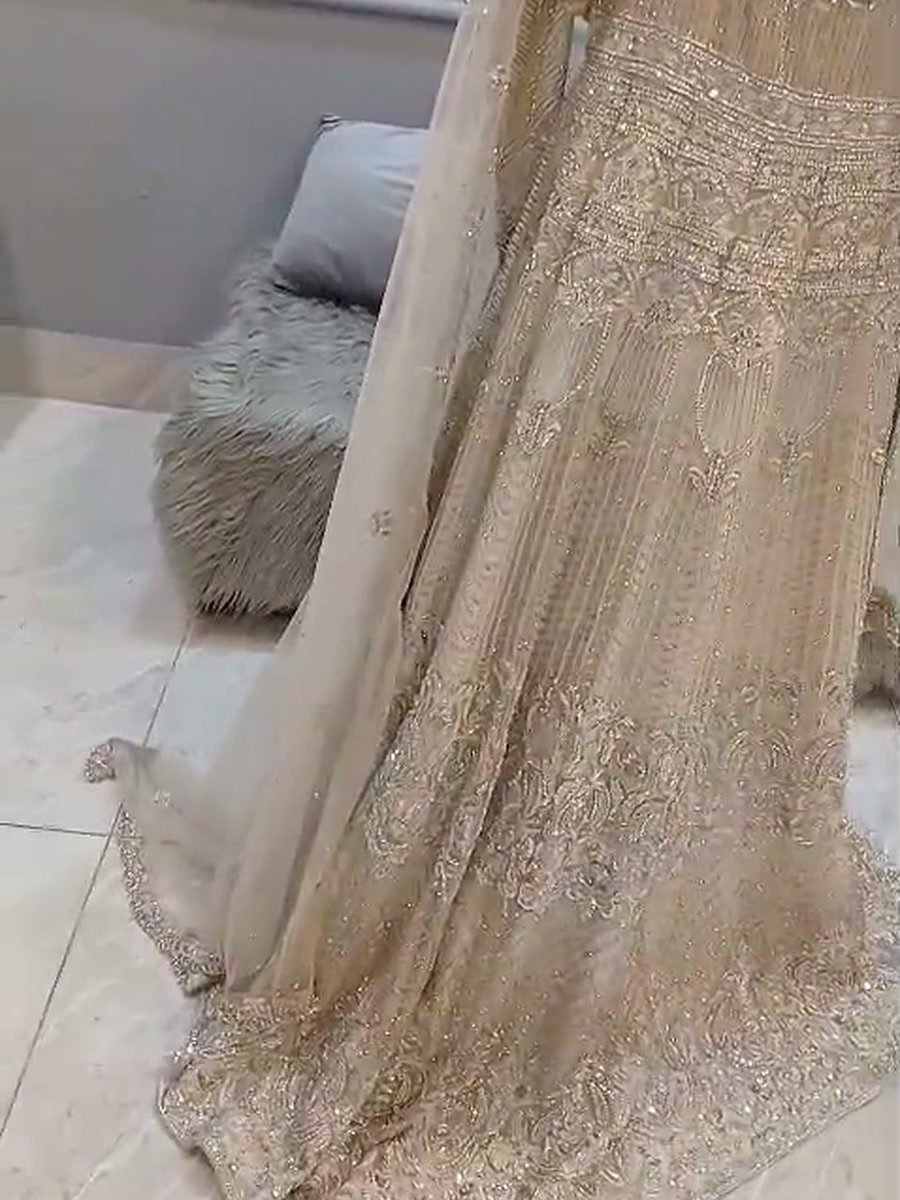
- The handwork. Hundreds of hours of zardozi, dabka, naqshi and tilla on an adda. This is the largest real cost in
any bridal piece, theirs or ours. - The fabric. Raw silk, velvet, tissue, organza, net; a bridal uses several.
- The design. A house's signature is the work of its designer and studio, and a share of every piece pays for
the collection, the shoot, the show. - The name. The label itself carries value, and the price carries the label.
- The flagship. The studio in Lahore or Karachi, the staff, the fittings, the bridal appointments.
Brides abroad pay for all five, and the last three are the ones they never wear.
Why most houses do not publish prices
Couture pricing is "on request" because each piece's handwork varies, because the price sits at a level that is
easier to say in a fitting than on a web page, and because publishing it invites comparison. Brides abroad, who
cannot walk into the studio, are left searching.
The other thing houses rarely offer: changes
The price is one issue. The other is that most houses make the design as designed. A different colour, a different
dupatta, a modest version, a lighter skirt: either not offered, or priced as a full custom commission, or dependent on
a fitting in Pakistan. For a bride in Manchester or Mississauga that is often the real obstacle.
How a made-to-measure piece is priced instead
When you send us a look you love and ask for it made to your measurements, our quote is built from the piece itself,
not from a label:
- The handwork hours for the design we agree: the technique (zardozi is slow, tilla is quicker), and how much of
the piece is covered. - The fabric we choose together.
- The silhouette and the sewing: a structured lehenga with a trail takes more than a long shirt.
- The finishing: lining, backing, edging, the work you do not see.
- Shipping to your country, and any customs there, shown separately.
What is not in it: a designer's name, a flagship, a collection. That is why a piece inspired by a look you love,
made in our own workshop, is priced on what it takes to make rather than on what it is called. Our guide to
what decides the cost of a bridal dress goes through each part.
What to expect in a quote from us
You send the look, the event, your country, and what you want changed. We come back with the design we would make
(a sketch where it helps), the fabric, the handwork plan, the quote and the timeline. If the quote is more than you
hoped, we tell you where the handwork can be lightened without losing the look: usually the skirt ground or the
dupatta. You see progress photos while it is made, and the piece arrives finished.
Why there are no prices on this site
Because every piece is made to order, a number on a page would either be wrong for yours or would push you towards a
standard piece. The quote on WhatsApp is for exactly what you asked for, and it comes quickly. A bride who wants a
sense of scale before writing can tell us her budget and the look; we will say honestly what is possible in it.
Three honest notes
- Made to measure is not cheap couture. It is couture priced on its making. A heavily worked barat piece is a
serious piece of work wherever it is made. - Time is part of the price. 8 to 12 weeks to make, plus shipping. A rushed piece costs more and is finished worse.
- The quote is for your piece. Two brides who send the same picture get different quotes if one wants a lighter
skirt and the other wants a fully worked dupatta.
Questions brides ask
Is a made-to-measure piece always cheaper than the house's? For a look with the same handwork, the difference is the label, the collection and the flagship, which are not in our quote. The handwork hours are the same wherever they are done, and they are the biggest part.
Can I set a budget first? Yes. Tell us the look and the budget, and we will say honestly what the budget makes, and where the handwork would be lightened to fit it.
Does the quote change after I agree? Not unless you change the design. We agree the piece in writing on WhatsApp before cutting.
What about shipping and customs? Shown separately with the quote, for your country, so there is no surprise at the door.
Send us the look you love, your event and your date, and we will tell you what it would take:
WhatsApp Omar Arshad Couture.
See get a look made and how it works.