Wedding season runs from October to February, and by now the collections are out, the brides in the UK, USA, Canada
and Australia have their folders full, and the patterns are clear. These are the trends we see in what brides abroad
are asking for this season, from the workshop's side: what is being ordered, what is being changed, and what has
quietly gone out. Trends come and go, so the address of this page stays the same while the words are updated each
season.
1. Red has gone deeper
Classic bright red is still chosen, but the barat colour this season is deeper: maroon, wine, oxblood, rust and
antique red, with antique gold rather than bright gold work. Brides want a richer, darker photograph, and the deeper
shades suit velvet and winter weddings. See what colour Pakistani brides wear.
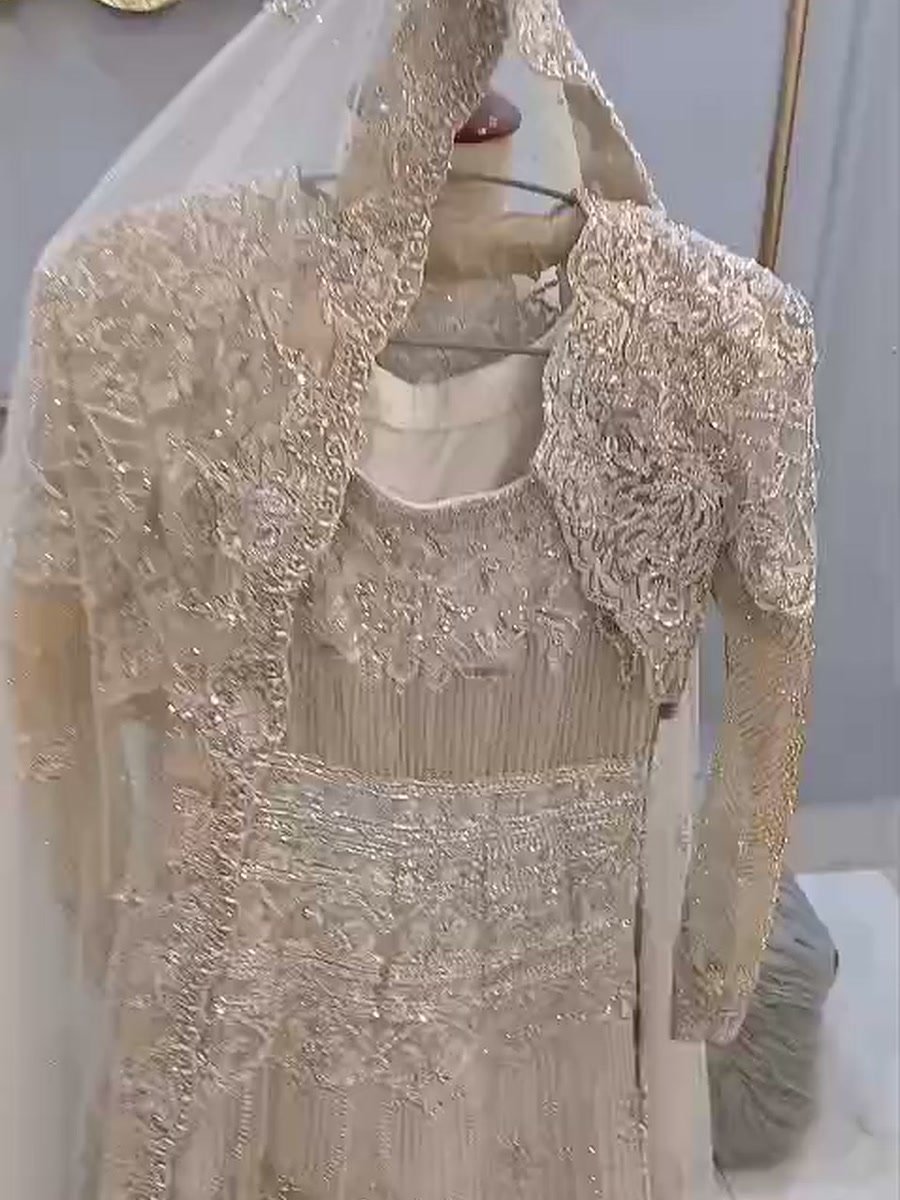
2. The ivory walima gown is the look
Ivory, champagne and pale gold walima gowns, with pearls and crystals and often a trail, are the most requested
walima piece of the season. The cropped embroidered jacket over a gown is the detail brides ask about most. The
walima maxi, simpler and easier to wear, is the alternative for brides who want to sit and eat.
3. The gharara is back
After years of lehengas, the gharara, with its fitted knee and pleated flare, is on the barat and nikkah again. In red
and gold for the barat, in pastels with a long shirt for the nikkah, in green for the mehndi. Brides like its
heritage feel and that it is different from everyone else's lehenga. Our
gharara vs sharara vs lehenga guide explains the difference.
4. Modest bridal is mainstream
Full sleeves, higher necklines, longer shirts and dupattas designed to sit over a hijab are no longer a special
request. A large share of the nikkah and walima pieces we make this season are designed modest from the start, and
they are among the most beautiful. See modest bridal.
5. Sarees at the walima and nikkah
The bridal saree, net or chiffon with a worked border and a fitted embroidered blouse, is being chosen for walimas by
brides who want something other than a lehenga or gown, and in ivory and pastel for nikkahs. Mothers and sisters are
in sarees for the walima too.
6. Velvet for winter, everywhere
Velvet walima dresses, velvet formals for the family and velvet bridal lehengas in deep colours are the winter
uniform again. Emerald, navy, wine and plum with gold. Our velvet guide has the detail.
7. Lighter handwork, placed with intent
The heaviest-possible lehenga is less requested than it was. Brides want the handwork where the camera sees it (the
bodice, the neckline, the dupatta border, the hem) and a cleaner ground, so the piece is lighter to wear and the
motifs read clearly. Antique gold, naqshi and pearls over bright sequins.
8. Pastels keep spreading
Blush, sage, powder blue, lilac and mint: on nikkah dresses, on walima lehengas and maxis, on mehndi outfits for
brides who want soft rather than bright. Pastel bridal with silver or pearl work is a season signature.
9. The mehndi goes multicolour
Plain yellow mehndi outfits are giving way to multicolour: panelled lehengas, multicolour resham, a dupatta in a
different colour from the rest. See mehndi outfits for brides.
10. Changes are expected
The biggest trend is not a colour or a cut. It is that brides abroad now expect to change a design: the colour, the
dupatta, the sleeve, the weight of work, a modest version. A saved picture is the starting point, not the order. That
is exactly what made to measure is for.
What has gone quiet
Very heavy cancan flares, bright gold on bright red, short cholis at the nikkah, and single-colour mehndi outfits are
all being asked for less. None of them is wrong; a bride who loves them should wear them. Trends are a map, not a
rule.
Having a trend made for you
Every piece we make is made to order in our own workshop in Pakistan, by hand, so any of the looks above can be made
in your colour, your silhouette and your measurements. Send us the look you love and the changes you want; we plan
it with you on WhatsApp and make it in 8 to 12 weeks, shipped to your door in the UK, USA, Canada or Australia.
Get a look made explains how, and the bridal page shows pieces made in our workshop.
Questions brides ask
Should I follow the trend or the classic? Follow what you will love in the photographs in ten years. The classics (red barat, ivory walima, pastel nikkah) are classics because they age well; a trend is a detail you add, not the whole piece.
Will a trend look dated? The colour and the silhouette do not date quickly. Very specific details (a particular fringe, a particular jacket) can. Keep the trend in the parts that are easy to love later.
How early should I order for this season? November to February is full. Write to us at least four months before your date, earlier if you can: a piece takes 8 to 12 weeks to make, plus shipping.
Do you update this page? Yes, each season, at the same address, so the link you save stays good.
Tell us your date and the trend you are leaning towards:
WhatsApp Omar Arshad Couture.